What Is Tinplate? A Clear Guide to Tin-Coated Steel
Tinplate is one of the oldest and most reliable materials in packaging, yet it is often confused with aluminium or plain steel. This guide explains exactly what tinplate is, how it is made, and why it remains the material of choice for premium decorative food tins.
What is tinplate, exactly?
Tinplate is thin, low-carbon steel that has been coated on both sides with an ultra-thin layer of tin. The steel provides strength, rigidity and formability; the tin layer provides corrosion resistance, a bright finish and a surface that solders and prints well. In short, tinplate is steel that behaves better because of a microscopic skin of tin.
The tin coating is genuinely thin — typically measured in grams per square metre, often the equivalent of a fraction of a micron per side. You are not holding a tin box; you are holding a steel box with a protective tin finish and, in most food applications, a food-safe lacquer over the top.
How tinplate is made
The process runs in a few clear stages:
- Steel base. A coil of cold-rolled low-carbon steel is cleaned and reduced to the required thickness, or gauge.
- Tin plating. The steel is passed through an electrolytic bath, which deposits a precise, even layer of tin on both surfaces. This is why tinplate is often called electrolytic tinplate, or ETP.
- Reflow and passivation. The coating is briefly melted and re-solidified to give it a bright, smooth finish, then chemically stabilised to resist oxidation.
- Lacquering and printing. For food use, a food-safe lacquer is applied so the contents never touch bare metal, and artwork is added by offset printing.
Two concepts matter when specifying material: gauge (the thickness of the steel, which governs strength and cost) and temper (its hardness and springiness, which governs how it forms and holds an edge). Getting these right is central to good tinplate packaging.
Tinplate vs aluminium: the real differences
Both are common metal packaging materials, but they are not interchangeable. The base metal changes almost everything.
Strength and feel
Steel is stronger and stiffer than aluminium at a comparable thickness, so tinplate resists denting and holds a crisp, structured form. It has a cool, solid, premium touch that many brands associate with quality. Aluminium is roughly a third of the density of steel, so an aluminium container of the same size feels noticeably lighter.
Magnetism
Because its base is steel, tinplate is ferromagnetic — a magnet sticks to it. Aluminium is non-magnetic. This is not a gimmick: it is why steel packaging is so easy to recover from mixed waste, as recycling plants simply pull it out with a magnet.
Cost and use
Per unit of strength, tinplate is generally the more economical metal, which is one reason it dominates rigid decorative tins. Aluminium's lightness and formability suit drinks cans, aerosols and foil, where low weight is the priority.
Why tinplate is used for decorative food packaging
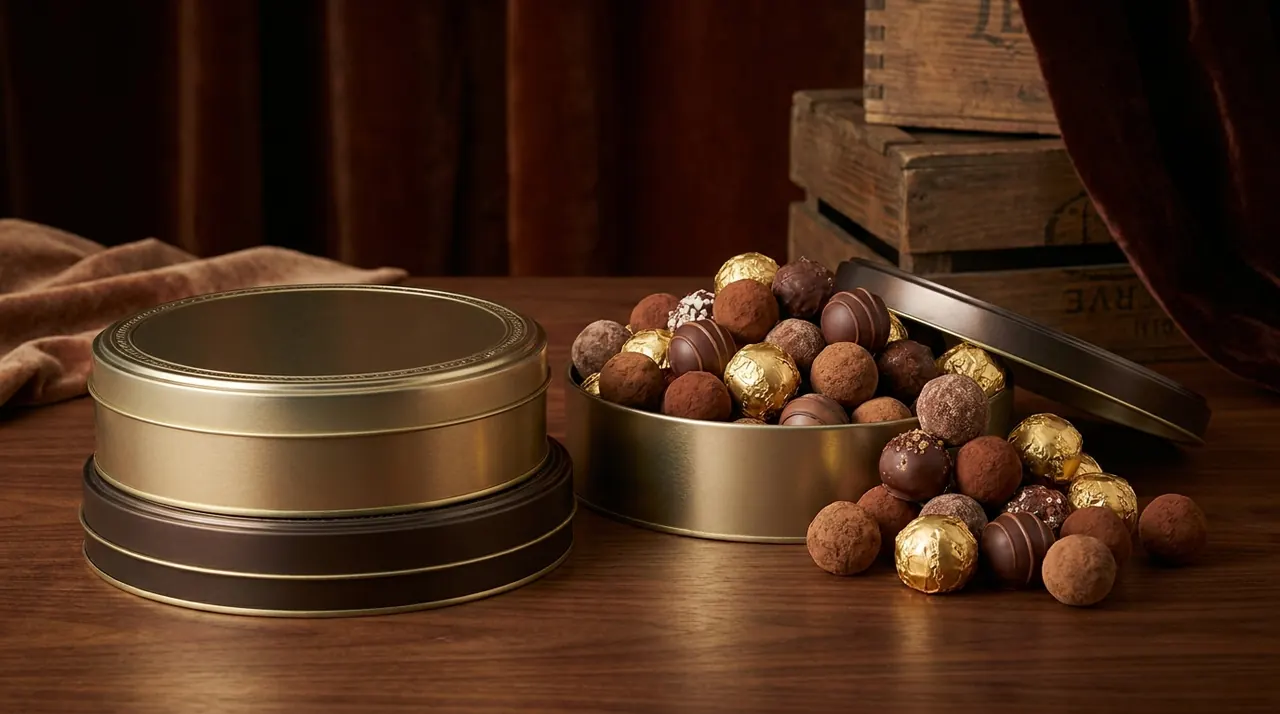
For chocolate, tea, coffee, biscuits and confectionery, tinplate offers a rare combination of protection and presentation. That balance is at the heart of why tin remains a first-choice format for premium ranges.
- Rigidity and protection. A tin shields delicate contents from crushing, moisture and physical damage far better than card or flexible film.
- Opacity. Metal blocks light completely, which helps protect flavour and colour in light-sensitive products such as tea and ground coffee.
- Print quality. Tinplate takes offset printing beautifully, reproducing fine detail, Pantone-matched colour and finishes such as embossing, debossing and metallic inks.
- Premium feel. The cool, solid, cool-touch surface signals quality the moment a customer picks it up.
- Reuse and recycling. Tins are kept, refilled and repurposed at home, and steel is endlessly recyclable at the end of life.
When the interior is finished correctly, the same tins double as food-safe tin packaging for direct contact with the product.
Key properties of tinplate
- Formability. It draws, bends and embosses cleanly, so complex shapes and detailed lids are achievable.
- Corrosion resistance. The tin layer, backed by lacquer, protects the steel from rust and reaction with the contents.
- Printability. A smooth, bright surface makes it an excellent canvas for high-fidelity offset artwork.
- Strength-to-cost. Steel delivers structural rigidity at a competitive price per unit of strength.
- Recyclability. Steel is infinitely recyclable, with a recycling rate of around 80% globally, and its magnetism makes recovery straightforward.
Is tinplate food-safe?
Tinplate is well suited to food contact when the interior is protected with an appropriate food-grade lacquer, so the product never touches bare metal. In general industry terms, food-contact materials in the EU are governed by framework rules such as Regulation (EC) 1935/2004, and the industry has moved toward BPA-free (BPA-NI) coatings. Food-contact suitability should always be confirmed per project against the applicable regulations for your market and product.
A short history of tinplate
Coating iron and steel with tin is a centuries-old craft. Early tinplate was made by dipping cleaned sheets into molten tin, a labour-intensive method that produced the first durable, corrosion-resistant food containers and made long-term food storage practical. The arrival of electrolytic tinning in the twentieth century transformed the material: instead of a thick hot-dipped layer, an electric current deposits a controlled, far thinner and more uniform coat of tin. That precision is what makes modern tinplate both economical and consistent, and it is why almost all decorative tins today use electrolytic tinplate rather than the old hot-dipped stock.
Grades, gauge and temper in practice
Not all tinplate is the same, and matching the material to the job is part of good specification. Two variables do most of the work:
- Gauge (thickness). A thicker gauge gives a heavier, more rigid tin that resists denting, at a higher material cost and weight. A thinner gauge lowers cost and shipping weight but flexes more, so it suits smaller or lightly handled tins.
- Temper (hardness). Softer tempers draw deeply without cracking, which is essential for seamless round tins with tall walls. Harder tempers hold a crisper edge and greater stiffness, which suits shallow lids and flat panels.
The coating weight of tin can also be varied and, for more demanding contents, is chosen alongside the interior lacquer. In practice a manufacturer selects gauge, temper and coating together so the finished tin forms cleanly, feels solid in the hand and protects what is inside.
Where tinplate fits your project
If you are choosing packaging for a chocolate, tea, coffee, biscuit, confectionery or gift line, tinplate offers structure, shelf presence and a genuinely reusable format that keeps your brand in customers' homes. As a decorative tin manufacturer working in tinplate since 1979 and shipping to 50+ countries, Masaş is trusted by brands that ship worldwide. To discuss shapes, sizes and finishes for your product, request a quote.
Aklınızda bir kutu mu var?
Şeklinizi, ebadınızı ve tasarımınızı bize iletin. Teklifinizi ve ücretsiz numunenizi gönderelim; saatler içinde yanıtlıyoruz.
Teklif Alın