Panettone Tin Packaging: A Guide for Italian Bakeries
Every autumn the same question comes up in bakeries across Italy: does this year's panettone go out in the carton again, or is it time to move to a tin? This guide collects what we ask, and what we are asked, when a pasticceria or a forno decides to package its panettone in a printed tin: sizes, lids, the inner bag, the interior lacquer, artwork, timing and minimum quantities.
Why bakeries are moving from carton to tin
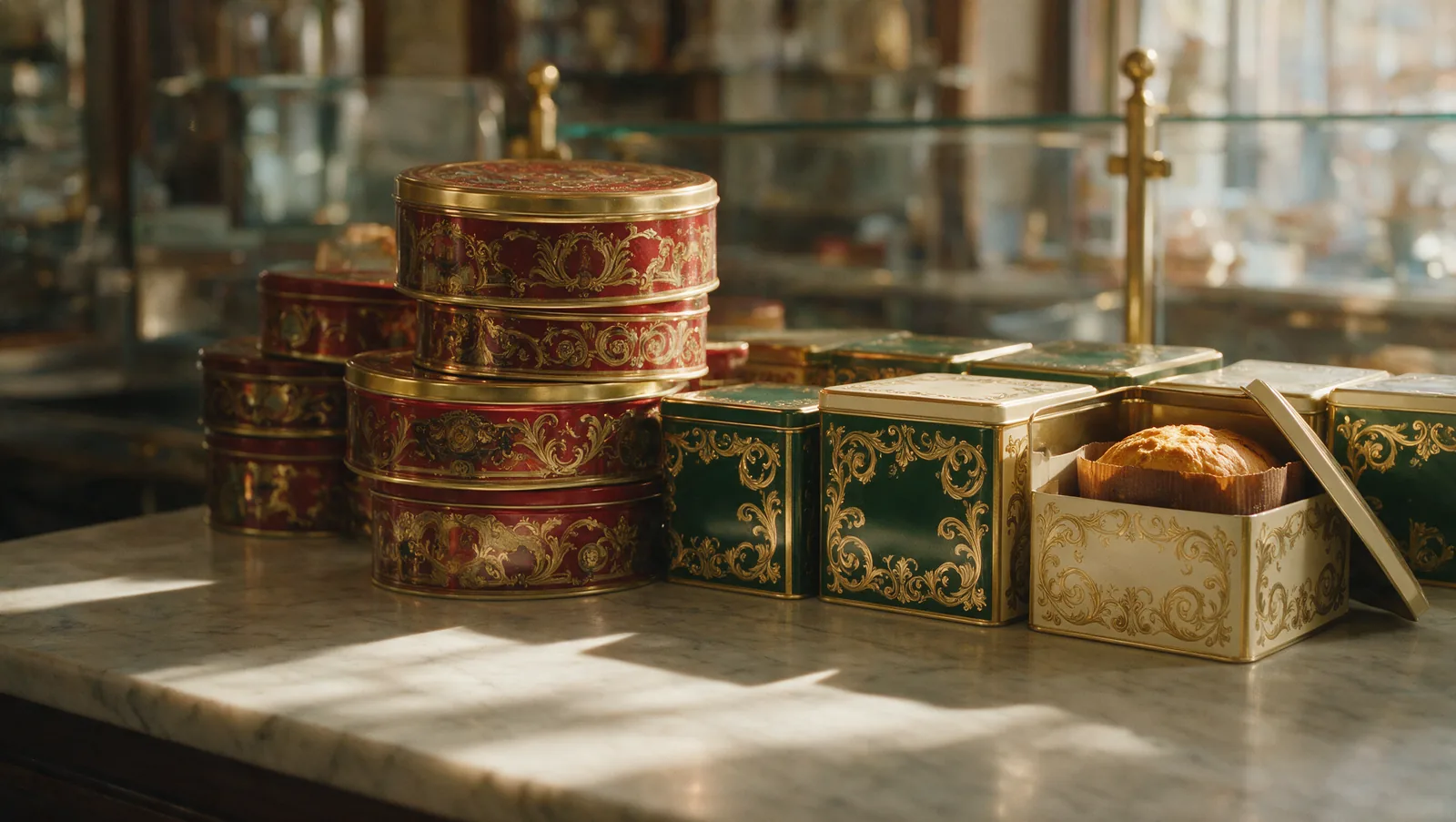
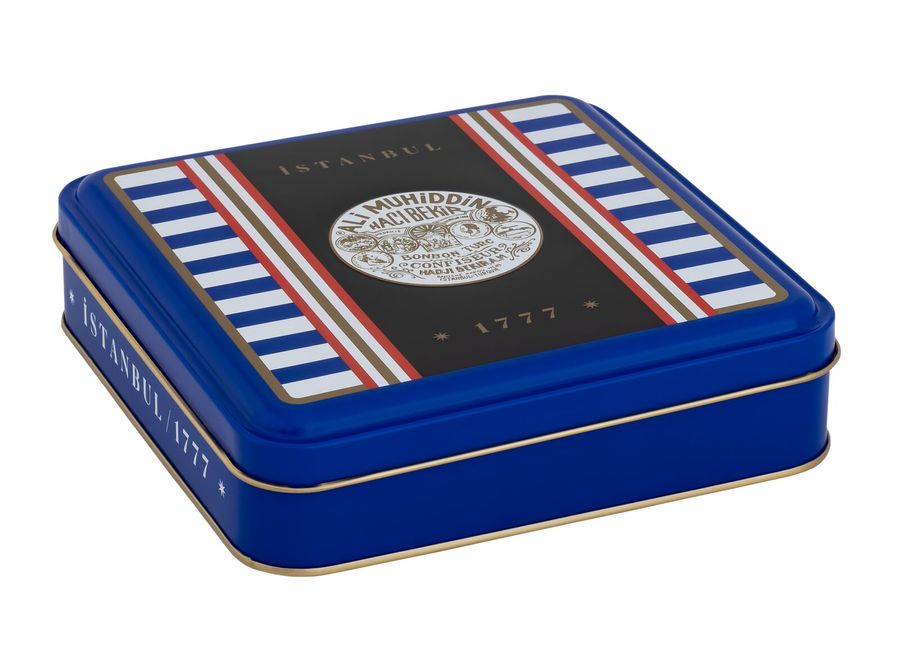
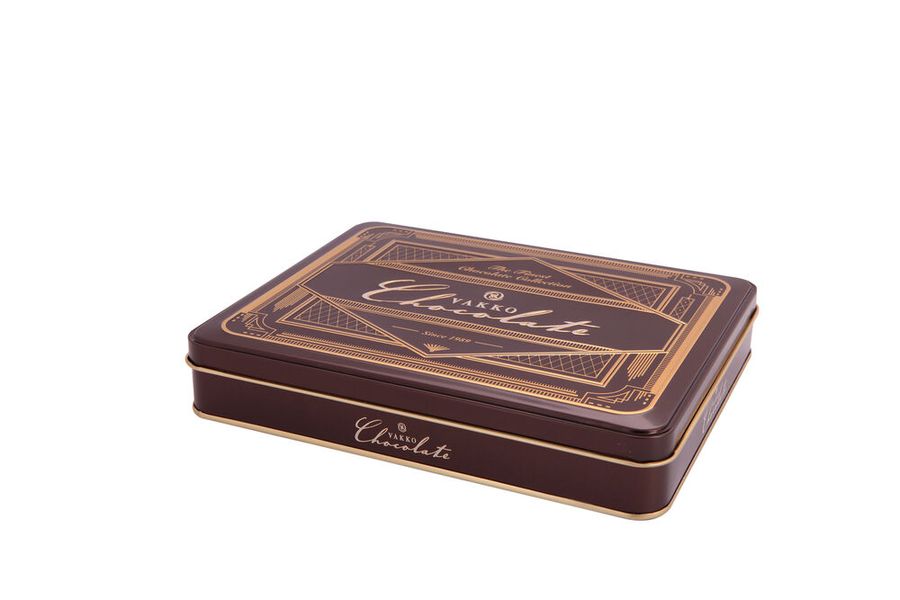
Three reasons come up in almost every conversation. The first is shelf presence. An offset-printed tinplate tin has weight in the hand, a shine and a depth of colour that carton cannot match, and on a shop counter or in a window it is visible from across the room. The second is gift value. For most customers a panettone is a gift, and a tin turns it into a finished present with no extra wrapping and no ribbon — one that supports a higher price point.
The third reason is the one bakeries underestimate most, and in our view the most important: the tin stays. A carton is in the recycling bin by the day after Christmas. The tin stays in the customer's kitchen for years, on a shelf or in the pantry, full of biscuits, buttons or letters, with your bakery's name on the lid. It is a quiet reminder that keeps working for you until next Christmas. And when it does reach the end of its life, the route is there: 84% of steel packaging placed on the EU market was recycled in 2024.
Which tin for which weight
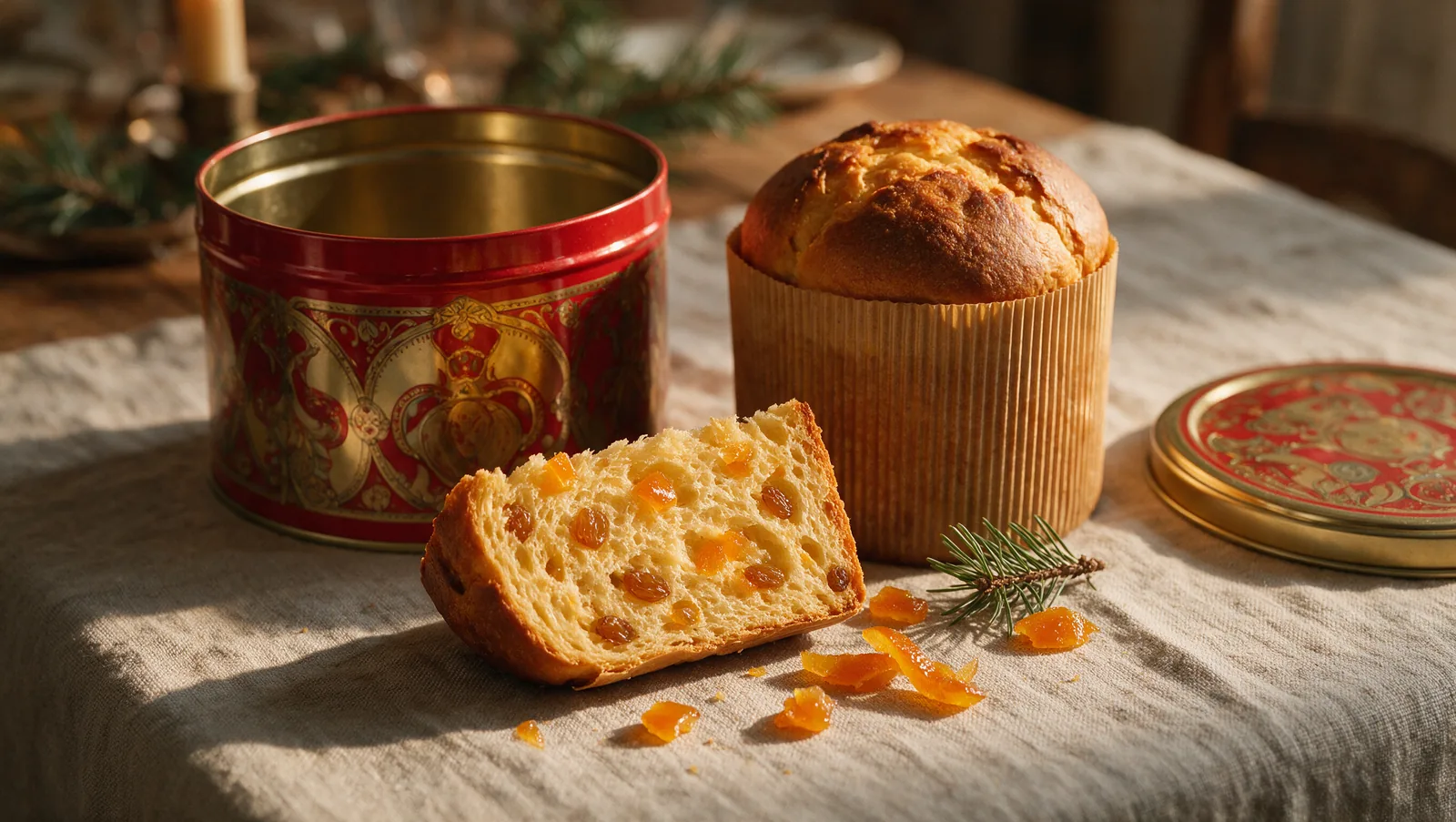
This is where a little arithmetic helps, because a baked panettone is bigger than the paper mould it was baked in. The tall-series paper moulds (the pirottino) are fairly standard: for a 500 g panettone roughly Ø125–134 mm by 95–100 mm high; for 750 g roughly Ø154 mm by 105–115 mm; for 1 kg roughly Ø165–172 mm by 110–125 mm. In the oven the dough flares 15–25 mm wider than the rim of the mould and the dome rises 30–50 mm above it. A 1 kg panettone therefore easily reaches 185–195 mm across and 150–170 mm in total height, before the bag.
Our six panettone formats come straight from those numbers. All are tall bodies, with heights from 100 to 150 mm, and the Ø215 and 215×215 also go up to 180 mm:
- 500 g: round Ø190 or square 190×190. The baked panettone measures 140–160 mm, leaving room for the bag and a card.
- 750 g: still Ø190 or 190×190, with a 170–180 mm panettone and 5–10 mm free on each side, enough for the bag.
- 1 kg: round Ø215 or square 215×215, our core size. With the panettone at 185–195 mm there are 10–15 mm to spare on each side, and the 150 or 180 mm height takes the dome.
- 1.5–2 kg: Ø265 or 235×235. The same Ø265 also serves a 1 kg panettone packed with a bottle, a jar of cream or other products as a gift set.
Square tins stack on a pallet with no wasted space; round tins follow the shape of the panettone and remain the classic choice. The same tooling serves pandoro, veneziana and, with the lower, wider Ø265 and 235×235, the Easter colomba: only the artwork changes. The full range is on our panettone sector page.
The lid: fitted, domed or with a window
The standard lid for panettone is the fitted slip lid, the classic lid that lifts off with the fingers and closes again with a light friction fit. It is the simplest to use and the right choice for a tin that will be opened a hundred times in the customer's home.
If you want to give the dome more air, choose the domed lid: the same fitted closure, but with the top raised by a few centimetres. It lets you use a shorter body, so the tin looks more compact, without crushing the almond glaze. The window lid adds a clear panel in the centre of the lid, so the customer sees the dome and the bag before buying. We recommend it for bakeries that sell mostly over the counter, less so for those who ship. We also make hinged, inner-plug, screw and clear acrylic lids, but for panettone the three options above cover nearly every case. A broader comparison is in our article on tin box lid types.
The inner bag: why the tin is not the barrier
Let us say it plainly, because it avoids misunderstandings: a decorative tin is not airtight. The fitted lid holds the aroma in and protects against knocks, but it does not seal. The barrier that protects the panettone from air and moisture is, and remains, the heat-sealed inner bag your bakery already uses today, with or without ethyl alcohol or an oxygen absorber.
For you this is a strength, not a limitation. Moving to a tin changes nothing in your workflow: the panettone cools, goes into the bag and is sealed exactly as before, and instead of going into a carton it goes into a tin. No new machine, no new shelf-life trial, no validation to repeat. The declared shelf life stays the shelf life of the bag, and the ingredient and lot card goes into the tin as before.
Food-safe interior lacquer
Even though the panettone never touches the metal, every food tin we make carries a food-safe interior lacquer, applied to the tinplate before forming. It protects the metal, rules out migration of odours, and makes the tin washable and reusable for years. Masaş is certified to ISO 9001 and ISO 22000, and the compliance documentation for the interior travels with every food-sector delivery. The details are on our page on food-safe tin packaging.
Artwork and finishes: offset print on tinplate
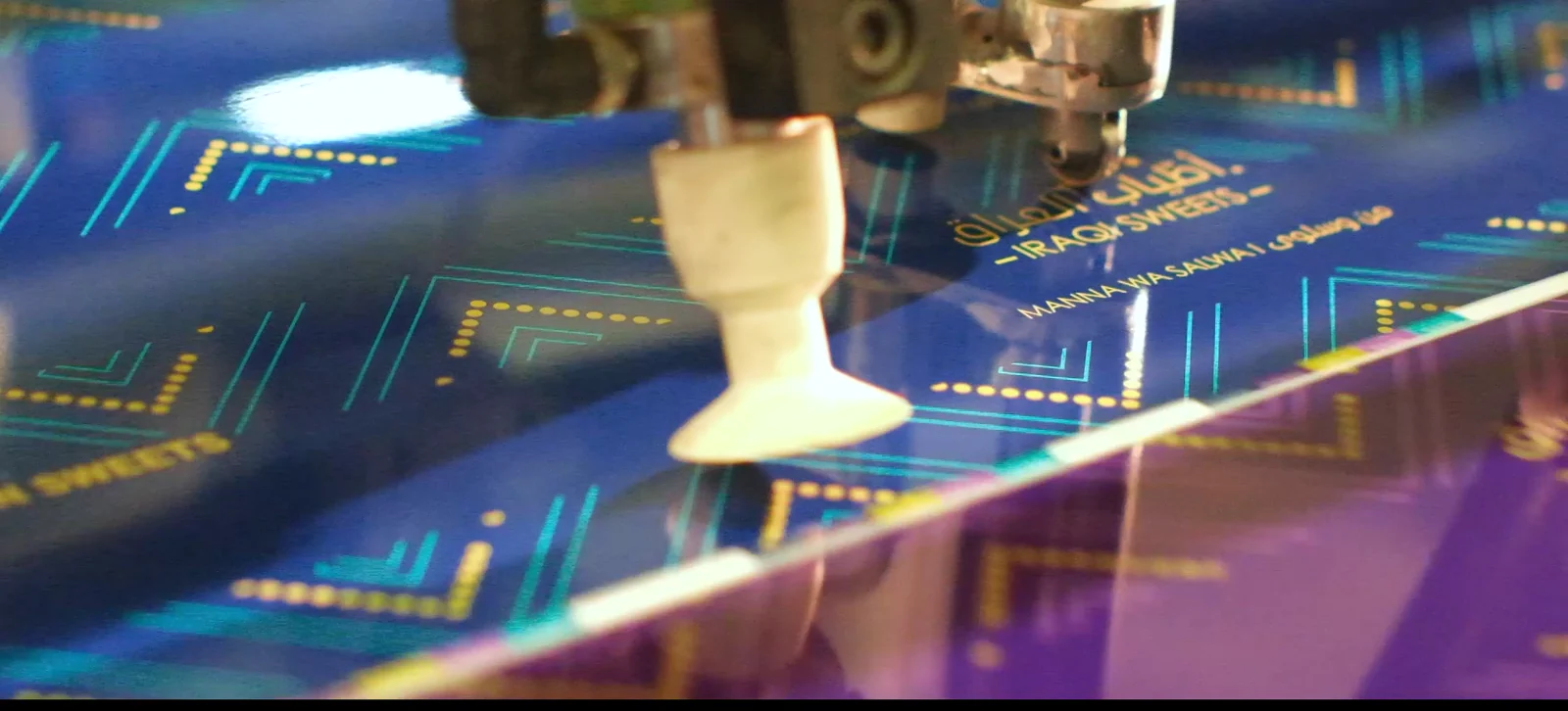
The tin is printed flat, before forming, by offset print on tinplate: four-colour process plus any spot colours, at a resolution that carries photographs, fine illustration and small type. Over the print you choose the varnish: gloss for saturated colours and classic Christmas decoration; matte for a more contemporary, tactile look; soft-touch for a velvety surface that invites the customer to pick the tin up.
Two techniques add depth. Embossing raises the logo, a motif or a border directly in the metal, and you feel it under the fingers. Metallic inks, and areas left as bare metal under clear varnish, use the natural shine of the tinplate for gold and silver effects that carton can only imitate with costly laminates. Our artwork studio lays out your design on the chosen format and sends a colour proof before the press runs; the artwork is yours and stays exclusive, while the mould belongs to Masaş and stays in İstanbul. The full list of processes is on our capabilities page.
Timing and minimum quantities
The six formats above run on existing Masaş tooling. That means no tooling wait: from artwork approval to finished tins takes 4–6 weeks. By contrast, a new format needs roughly 8 weeks of tooling plus 4–6 weeks of production, 12–14 weeks in all.
Italian bakeries usually order Christmas tins between February and June, and colomba tins between October and January. But with existing tooling an order confirmed in September still makes Christmas, with margin for delivery and bagging. The minimum order is 5,000–25,000 pieces per artwork and size, depending on the format and the finishes. Under 5,000? Tell us your volume and we will tell you plainly what is possible. Before you decide, you can ask for a free sample: an existing tin, not printed with your artwork, with only the courier cost on your side. The full reasoning on minimums is in our article on custom tin minimum order quantities.
Where to start
If you are considering a tin for next Christmas, the quickest route is to tell us three things: the weight of your panettone, the number of pieces you expect to pack, and the date by which you need the tins. With those we can propose the format, the lid and the finishes that fit. The formats and options are on the panettone sector page, and you can send your request from the request for quotation page.
Метални опаковки по поръчка
Свързани сектори
Подходящи кутии
Имате ли идея за кутия?
Кажете ни Вашата форма, размер и файлове за печат. Изпращаме оферта и безплатна мостра и отговаряме в рамките на часове.
Заявете оферта