Are Tin Boxes Recyclable? The Complete Sustainability Guide
Short answer: yes, tin boxes are recyclable, and they are among the easiest packaging formats to recover. This guide explains why, how the recycling loop actually works, and what brands and consumers can do to make sure a tin gets a second, third and hundredth life.
The longer answer is more interesting than a simple yes. A decorative tin is not really "tin" at all in the everyday sense. It is steel with a very thin protective coating, and steel is one of the most recycled materials on the planet, recovered in a genuine closed loop rather than downcycled into something lesser.
What a Tin Box Is Actually Made Of
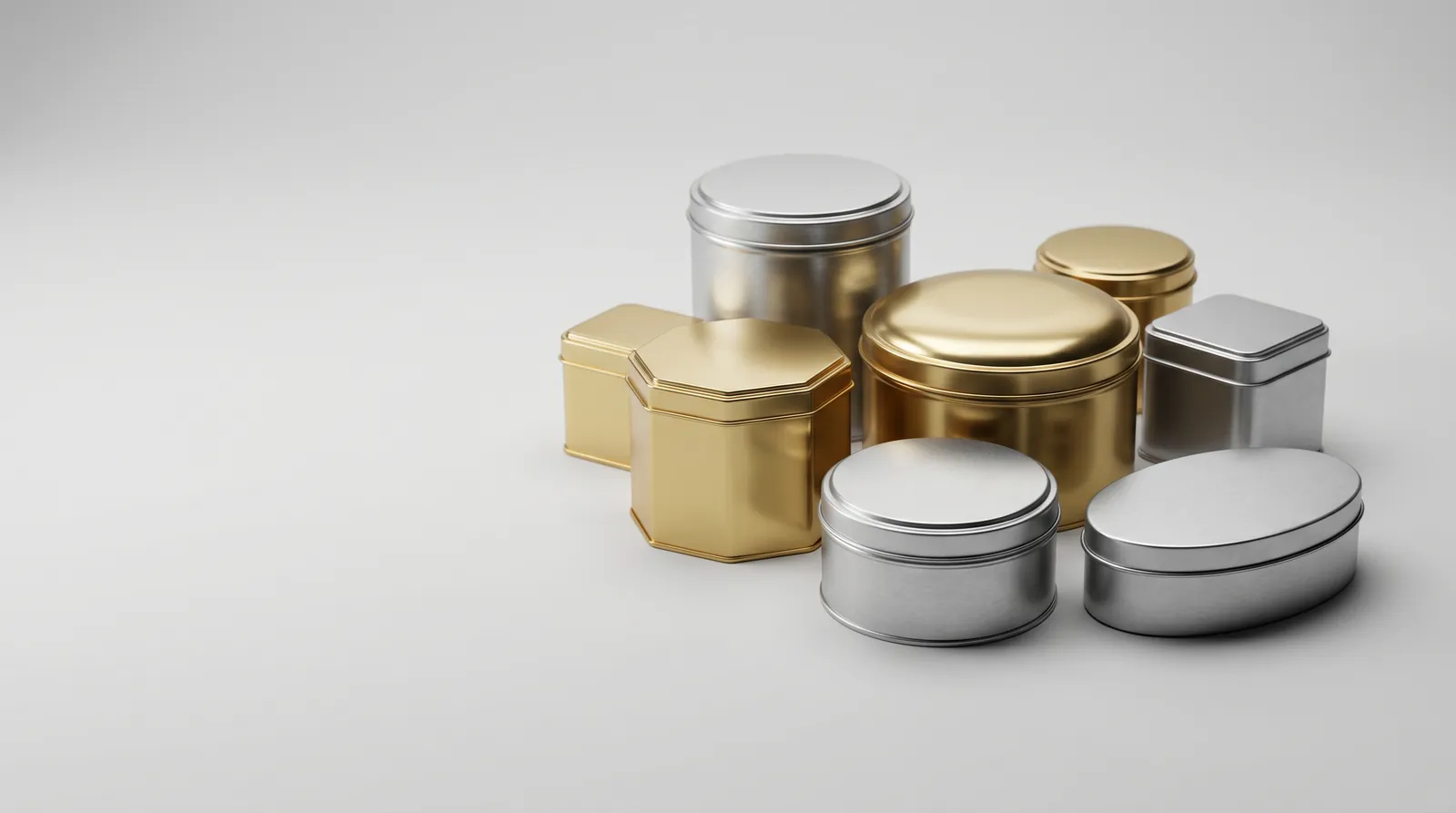
Most decorative tins are made from tinplate: low-carbon steel sheet coated with an extremely thin layer of tin, typically a fraction of a micron. The steel gives the box its strength, formability and that satisfying rigidity. The tin coating protects against corrosion and gives tinplate its bright, print-friendly surface.
Because the structural material is steel, a tin box inherits steel's single most important environmental property: it is a permanent material. Steel can be melted and reformed indefinitely without any loss of quality, so the metal in today's biscuit tin can become tomorrow's new packaging, a car panel or a steel beam. To see the raw format in more detail, our overview of tinplate packaging breaks down the material and its uses.
Are Tin Boxes Recyclable? Yes, and Here Is Why
Steel is infinitely recyclable. Unlike many materials that degrade each time they are reprocessed, steel retains its full mechanical properties no matter how many times it goes round the loop. That is why the industry describes it as a "permanent" material.
The real-world numbers back this up. Steel enjoys one of the highest recycling rates of any packaging material, with a global steel recycling rate of around 80%. For a brand thinking about end-of-life, that is an unusually reassuring figure, and it reflects how efficiently steel is recovered rather than sent to landfill.
The Closed Loop: How a Tin Actually Gets Recycled
The reason steel recovery rates are so high comes down to one physical property: steel is ferrous, so it is magnetic. That makes it remarkably easy to sort.
Magnetic Separation
At a materials recovery facility, mixed waste passes under powerful overband magnets. Steel items, including tin boxes, are pulled cleanly out of the stream automatically, with no consumer effort and no complex identification step. Plastics, by contrast, must be separated by resin type using optical sorting, which is slower and less reliable.
Remelting Into New Steel
Once separated, the clean steel scrap is baled and sent to a steelworks, where it is melted down with other scrap and refined into new steel. The thin tin coating is recovered during processing. The output is high-quality steel ready to become new products, which is what makes this a true closed loop rather than a one-way trip to a lower-grade use.
- Collect: tins are placed in kerbside metal or mixed recycling.
- Sort: magnets pull ferrous metal out of the waste stream.
- Melt: scrap is remelted into fresh steel.
- Remake: new steel becomes packaging, vehicles or construction material.
Reuse: The Quiet Sustainability Advantage
Recycling is only half the story. Decorative tins have a habit of never reaching the recycling bin for years, because people keep them. A well-designed tin becomes a place to store buttons, spices, tea, photographs, screws or keepsakes long after the original contents are gone.
This reuse is genuinely valuable from a sustainability point of view: every year a tin stays in a cupboard is a year no replacement packaging is manufactured. It is also a quiet, ongoing brand touchpoint. A branded tin sitting on a shelf keeps a name in front of a customer far longer than a pouch that is thrown away in seconds. That durability is one reason brands choose decorative tin boxes for products meant to be remembered.
Tin vs Plastic: An Honest Comparison
Plastic packaging is not never recycled, and it is right to be fair about that. Some plastics are recovered effectively, and lightweight plastic can carry a low transport footprint. But the systems differ in ways that matter.
- Recovery in practice: steel's magnetic sortability drives consistently high real-world recycling rates. Plastic recycling is fragmented and depends heavily on resin type, local infrastructure and clean separation.
- Quality after recycling: steel is remade into steel of equal quality, indefinitely. Plastic is frequently downcycled into lower-grade uses and cannot loop endlessly.
- End-of-life outcome: a large share of plastic still ends up landfilled or incinerated, whereas steel that reaches a sorting facility is almost always recovered.
- Reuse behaviour: people keep and reuse attractive tins; single-use plastic is usually discarded immediately.
None of this makes tin flawless. Steel is heavier, so transport emissions per unit are higher, and production is energy-intensive. The case for tin rests on longevity, reuse and a recycling system that genuinely works at scale. You can read more about how we think about material choices and quality and sustainability together.
Practical Guidance for Consumers and Brands
Getting a tin recycled properly is simple, but a few steps help.
- Empty and give it a quick rinse. Food residue can contaminate a batch; a rinse is enough, and it need not be spotless.
- Remove non-metal parts. Take out any plastic windows, paper liners, ribbon or cardboard inserts and recycle those separately where possible.
- Check kerbside vs metal recycling. Many councils accept metal tins at the kerb; where they do not, tins can go to a household waste recycling centre's metal stream.
- Keep lids with bodies. Loose small lids are easier to recover when left inside or reattached to the tin.
- Consider reuse first. The most sustainable outcome is often to keep the tin in service before it is ever recycled.
For brands, the design choices made at the outset shape recyclability. Keeping the box predominantly metal, minimising mixed-material components and using food-safe coatings all make end-of-life cleaner. Trusted by brands that ship worldwide, well-made tins are built to be kept, reused and, eventually, fully recovered.
The Bottom Line
Tin boxes are recyclable, and better than that, they are part of a mature circular system: magnetically recoverable, remelted without downcycling, and infinitely reusable as a material. Add in the years of reuse a good tin earns on a shelf, and the format stacks up strongly on sustainability. If you are weighing packaging for a product meant to last and to be remembered, request a quote and we will help you specify a tin that performs on both counts.
Van már elképzelése egy fémdobozról?
Adja meg a formát, a méretet és a grafikát. Árajánlatot és ingyenes mintát küldünk, és néhány órán belül válaszolunk.
Ajánlatot kérek