Tin Box Lid Types: How to Choose the Right Closure
The lid does more work than any other part of a tin. It decides how the box opens, how well it protects the contents, how it feels in the hand, and whether the customer keeps it on a shelf afterwards. Choosing the right lid type early saves cost and rework later. This guide walks through the main tin box lid types, how tightly each one holds, and which products they suit.
Why the lid choice matters more than it looks
Two tins can share an identical printed body and behave completely differently because of the lid. A lid governs three things at once: the tightness of fit (how much dust, moisture and air it keeps out), the reclosability (how satisfying it is to open and close repeatedly), and the opening action that shapes first impressions on shelf. It also affects tooling. A simple slip lid shares tooling with many other tins; a bespoke hinged mechanism needs its own dies. Deciding the lid type up front keeps your quote realistic.
Slip-on and shoulder lids
The slip-on lid is the workhorse of decorative packaging. The lid drops over the outside of the body, held by friction. A shoulder (or telescopic) version adds an inner step so the lid seats onto a recessed rim, giving a flush profile and a firmer, more deliberate close.
- Fit: snug and reassuring, but not airtight on its own.
- Reclosability: excellent - designed to be opened and closed many times.
- Best for: biscuits, confectionery, gift sets, and most caddies where a satisfying pop and easy reuse matter more than a hermetic seal.
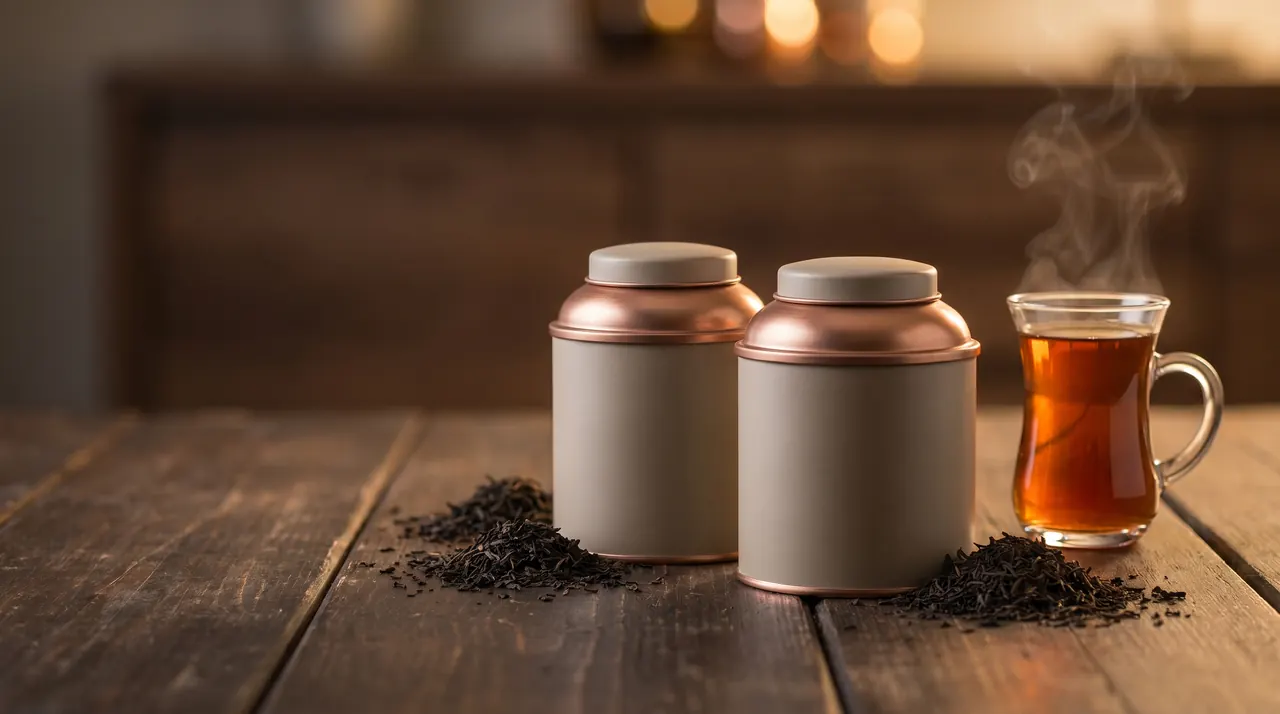
Because they are so versatile, slip and shoulder lids dominate the range of tin boxes with lids, and they pair naturally with round bodies. Many of the classic round tin boxes used for tea and coffee rely on exactly this construction.
Hinged lids
A hinged lid stays attached to the body, so it cannot be misplaced. It suits products the customer reaches into often, and it gives a premium, considered opening.
- Fit: good for dry goods; the hinge line is not a moisture seal, so pair it with an inner liner for sensitive contents.
- Reclosability: very good, and effortless one-handed use.
- Best for: mints, pastilles, chewing gum, tobacco, small hardware, and pocket-carry formats.
Hinged pocket tins are a familiar sight for mints precisely because the lid never gets lost and flips open with one thumb.
Screw lids
A threaded lid trades speed of opening for a more secure, resealable closure. The thread creates a longer contact path than a slip fit, which improves resistance to spills and slows air exchange.
- Fit: the tightest of the common decorative closures, though still not a guaranteed hermetic seal without an added liner or membrane.
- Reclosability: excellent and tamper-evident in feel.
- Best for: loose-leaf tea, ground spices, and coffee where you want to slow staling, and for taller canisters that will be handled and poured.
Window and crystal lids
A window lid sets a clear panel (often called a crystal lid) into the top so the product is visible before the box is opened. It is a merchandising decision as much as a structural one.
- Fit: similar to the underlying slip or shoulder construction; the window adds no seal but adds shelf appeal.
- Reclosability: as good as the base lid it is built on.
- Best for: assorted chocolates, biscuits, tea bags, and gift assortments where seeing the contents drives the purchase.
Domed lids
A domed lid rises in a convex curve rather than sitting flat. The extra headroom lets you present piled or rounded contents, and the raised profile reads as generous and gift-like.
- Fit: depends on the closure beneath it; the dome is about volume and presence, not sealing.
- Reclosability: matches the base slip or shoulder lid.
- Best for: premium confectionery, seasonal gift tins, and hampers where the shape itself is part of the reveal.
The seal spectrum: how tight is tight enough?
It helps to think of decorative lids on a spectrum rather than as simply sealed or unsealed. At one end, a plain slip lid keeps out dust and casual handling but exchanges air freely. In the middle, a shoulder lid with a longer contact rim slows that exchange and feels more secure. Nearer the tight end, a screw thread creates the longest sealing path of the common closures and noticeably slows staling. None of these, on their own, are a true hermetic seal, and that is an honest and important distinction to make with buyers.
The practical takeaway: match the lid to how sensitive the product is and how long it must last. A gift biscuit tin opened within weeks is well served by a slip or shoulder lid. Loose-leaf tea or ground coffee that must stay aromatic for months benefits from a screw lid, and from an inner barrier bag if the shelf life is long. Deciding this early avoids the disappointment of a beautiful tin that lets the product go stale.
Reclosability and the customer's second life for the tin
One of the quiet advantages of a decorative tin over a carton is that people keep it. A lid that opens and closes cleanly, time after time, turns packaging into a keepsake that carries your brand on a desk or shelf long after the contents are gone. Slip, shoulder and hinged lids all excel here; screw lids add security at the cost of a slightly slower open. Domed and window lids ride on whatever base closure they are built on. If repeat use and brand longevity matter to you, weight the decision towards a lid that feels good on the hundredth open, not just the first.
How to match the lid to the product
A quick way to narrow the choice:
- Tea: screw lid for loose leaf you want to keep fresh; slip or shoulder for tea-bag caddies and gifting.
- Coffee: screw lid on a taller canister to slow staling and allow easy pouring.
- Gifts: shoulder, window or domed lids, where the opening and the look carry the value.
- Mints and pocket formats: hinged, so the lid stays put and opens one-handed.
For any product that must stay genuinely fresh, remember that the lid alone rarely delivers a full barrier. The usual approach is a decorative tin plus an inner sealed bag or liner sized to the contents, so you get shelf appeal outside and protection inside without compromising either.
Practical notes on cost and tooling
Slip and shoulder lids are generally the most economical because they draw on shared tooling. Hinged and screw closures add mechanism and thread tooling, so they carry a higher setup cost that is absorbed comfortably across a normal production run. Window lids add the cost of the clear panel and its insertion; domed lids add a forming step. None of these are exotic, but each nudges the price, so it pays to fix the lid type before artwork is finalised.
If you are weighing options for a specific product, request a quote with your contents, target shelf life and quantity, and we will recommend a lid type and closure that fits the brief.
Mają Państwo puszkę na oku?
Wystarczy podać kształt, rozmiar i grafikę. Prześlemy wycenę i bezpłatną próbkę, odpowiadając w ciągu kilku godzin.
Zapytaj o wycenę