
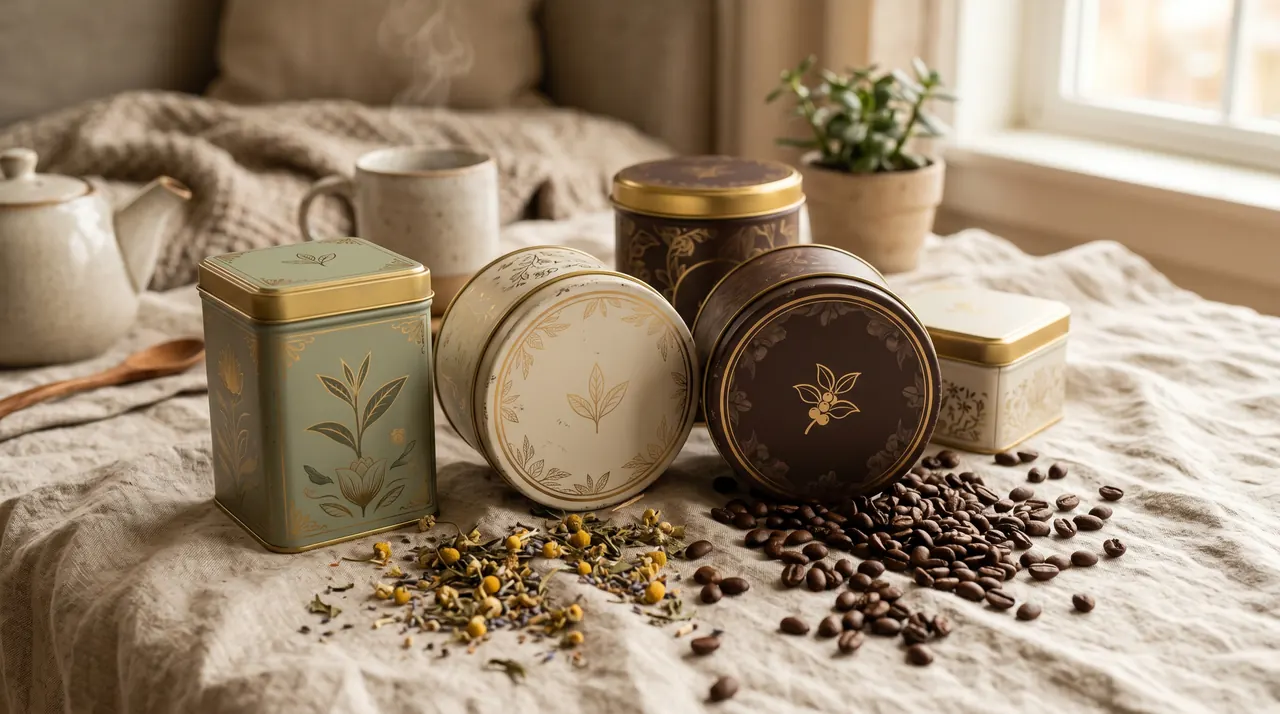
Round Tin Boxes
The round tin is the shape most people picture the moment someone says "tin box." It is the format that carried coffee across oceans, shielded tea leaves from light on pantry shelves, and turned a scented candle into something worth keeping on a coffee table long after the wax is gone. At Masaş, we have been forming, printing and finishing round tinplate packaging in İstanbul since 1979, and the circle remains one of our most requested shapes for exactly that reason: it feels timeless, it sits naturally in the hand, and it prints beautifully with no sharp corners to interrupt a label or a pattern.
A round tin is also a precise piece of engineering. The curvature of the body affects wall stiffness, seam placement, and how a lid seats and releases, which is why round tins are produced either as seamless deep-drawn shells or as formed-and-seamed bodies depending on the diameter, height and end use. Whether you need a small Ø41 mm tin for a lip balm or a large drum-style tin for bulk tea, our in-house tooling, offset printing and metal-forming lines let us match the construction method to the product inside and the shelf story you want to tell.
Masaş has manufactured decorative tinplate packaging in İstanbul since 1979 and exports to more than 50 countries. Design, tooling, offset printing, forming and food-safe lacquering are all done in our own plant. We hold moulds rather than finished printed stock, so every printed tin is formed and printed to your order. The figures below apply to anything on this page.
- Moulds we hold
- 141
- Lead time
- 4–6 weeks
- Certification
- ISO 9001 · ISO 22000
Where round tins work hardest
Round is the default shape for categories where the product itself is loose, granular or cylindrical: ground and whole-bean coffee, loose-leaf and bagged tea, ground spices, pastilles, and travel candles. It is also the classic silhouette for pressed powders and solid balms in cosmetics, where a shallow round tin with a slip-on or screw lid reads as premium and refillable rather than disposable. Round tins are equally at home as a display object — stacked coffee tins on a café counter, spice tins arranged on an open shelf, or a candle tin left out as decor once the fragrance is spent. Because the shape has no corners to catch or dent, round tins also travel well through fulfilment and retail handling, which matters for brands shipping direct to consumer.
Diameters, heights, and how the round shape scales
Round tins scale from small format upward starting at Ø41 mm, suiting single-use samples, lip balms and miniature gift tins, through mid-range diameters built for a standard 100–250 g coffee or tea fill, up to large drum tins for bulk retail or wholesale volumes. Height is just as flexible as diameter: a low, wide tin suits pastilles or a compact cosmetic balm, while a taller cylinder suits loose-leaf tea or ground coffee that needs more headspace. Because we produce custom tooling in-house, we are not limited to a fixed catalogue of existing diameters — a round tin can be sized to match an existing case pack, a specific gram fill, or a shelf-facing width your retail buyer has specified.
Seamless deep-drawn vs. formed round bodies
Not all round tins are built the same way, and the construction method affects both cost and performance. Seamless deep-drawn bodies are pressed from a single tinplate disc into a cup shape with no side seam at all, giving a completely smooth cylindrical wall that is ideal for premium cosmetics, candle tins, and any design where a visible seam line would interrupt full-wraparound artwork. Formed and seamed round bodies, by contrast, are rolled from a flat sheet and joined along a single vertical seam, which is the more efficient route for larger diameters, taller tins, and higher-volume runs such as bulk coffee or tea tins. We help you choose the right construction for your diameter, height, print design and order volume before tooling begins.
Lid options built for the round shape
The round body pairs with the full range of Masaş lid systems. A slip-on lid is the classic choice for coffee, tea and spice tins, offering a simple push-fit reseal that still protects a food-grade lacquered interior. A screw lid gives a tighter, travel-friendly reclose for balms, salves and cosmetic tins that get tossed in a bag — firmer than a push fit, though no metal lid on a decorative tin is a hermetic seal. A hinged lid turns a round tin into a keepsake box that stays attached and open-displays its contents, popular for gifting and candle presentation. For retail shelf impact, a window lid lets the product — coffee beans, tea leaves, pastilles — sell itself through a clear panel, while a domed or crystal lid adds a premium, jewel-box finish to cosmetics and small luxury gift tins.
Printing and finishing on a curved surface
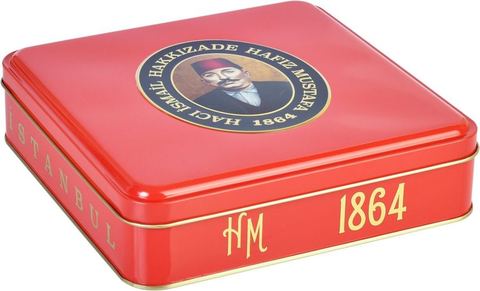
Printing on a cylinder is a different discipline from printing on a flat panel, and it is one of the reasons in-house offset printing matters. Pantone-matched colour has to wrap cleanly around the curve with no visible registration drift where the pattern meets itself, and finishes such as matte, gloss or soft-touch varnish, spot-UV highlights, embossing or debossing, and metallic or pearlescent inks all read differently on a curved surface than on a flat one. Because design, tooling and printing sit under one roof at Masaş, we proof round-tin artwork on the actual curvature and lid profile you will ship, not on a flat mock-up, so the finished tin on the shelf matches what was approved.
Real tins from our factory
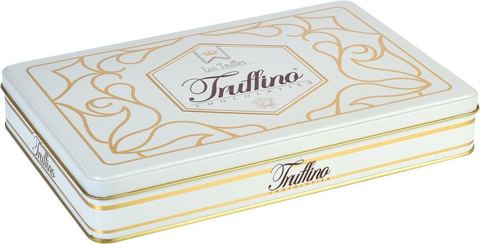
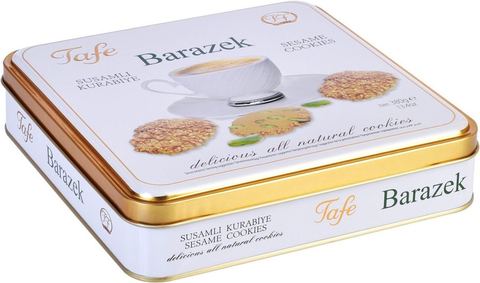
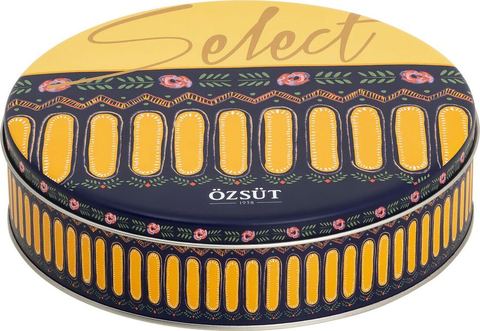
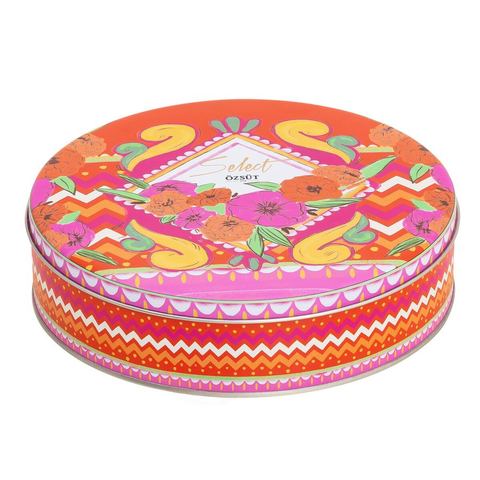
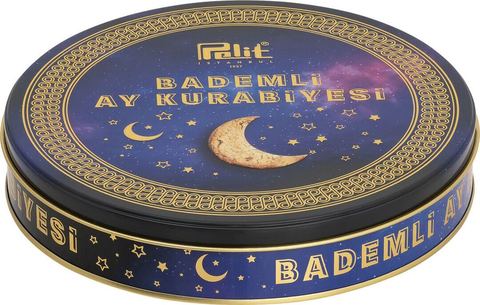
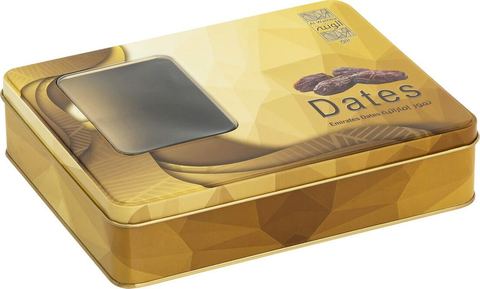
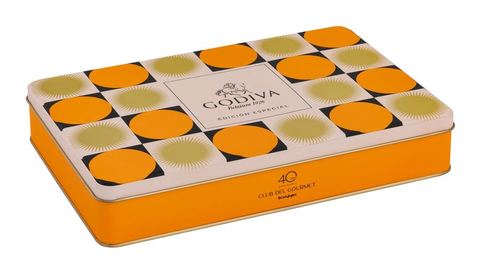
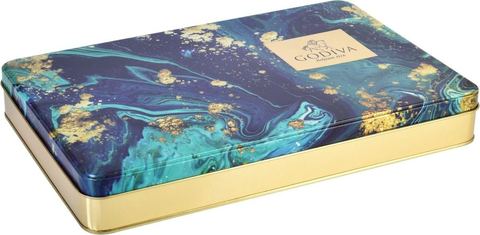
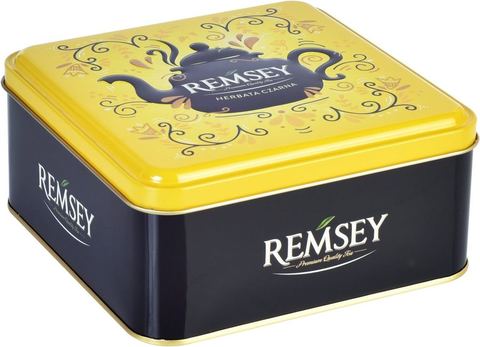
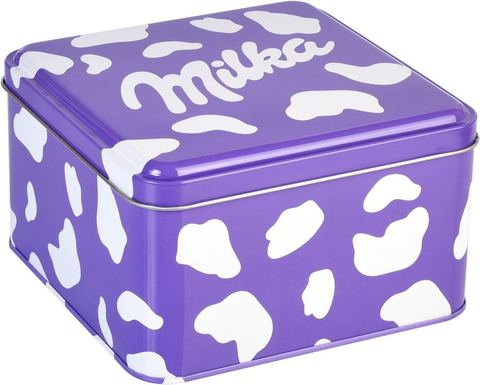
A few of the decorative tins we have designed, printed and formed in-house.

Trusted by brands that ship worldwide









Ready to develop your round tin?
Free samples worldwide · we reply within hours · your shape, your artwork.
Frequently asked questions
What is the smallest diameter you can produce for a round tin?
Our round tins start from Ø41 mm, which suits single-use samples, lip balm tins and miniature gift or favour tins. From there, diameter and height scale up to large-format drum tins for bulk coffee, tea or wholesale fills.
What is the difference between a seamless and a formed round tin?
A seamless deep-drawn tin is pressed from one disc of tinplate with no side seam, giving a fully smooth wall best suited to premium cosmetics and candles. A formed and seamed tin is rolled from a flat sheet and joined at one seam, which is more efficient for larger diameters and higher-volume runs like coffee and tea tins.
Which lid is best for a coffee or tea tin?
Slip-on lids are the most common choice for coffee and tea because they combine an easy push-fit reseal with a food-grade lacquered interior. Window lids are also popular where you want the product visible on shelf, and screw lids suit smaller travel-format tins.
Can round tins be used for food contact?
Yes. Interiors can be finished in food-grade lacquer, with food-contact suitability confirmed per project against the applicable regulations for your product and market.
What is the minimum order quantity for a custom round tin?
Custom round tin runs are typically produced from 5,000 to 25,000 pieces per design and size. Diameter sets the direction: a large drum tin sits near 5,000, while a small Ø41 mm tin usually needs 20,000 to 25,000, because many more small tins come off one sheet of tinplate and a short run of them never repays the setup. A mould we already hold removes the tooling charge and around eight weeks of lead time, but not the print minimum — ask our team to scope your specific size and volume.
Ready to develop your round tin?
Send us your diameter, height, fill weight and lid preference and our team will scope tooling, print finish and lead time for your round tin project.