
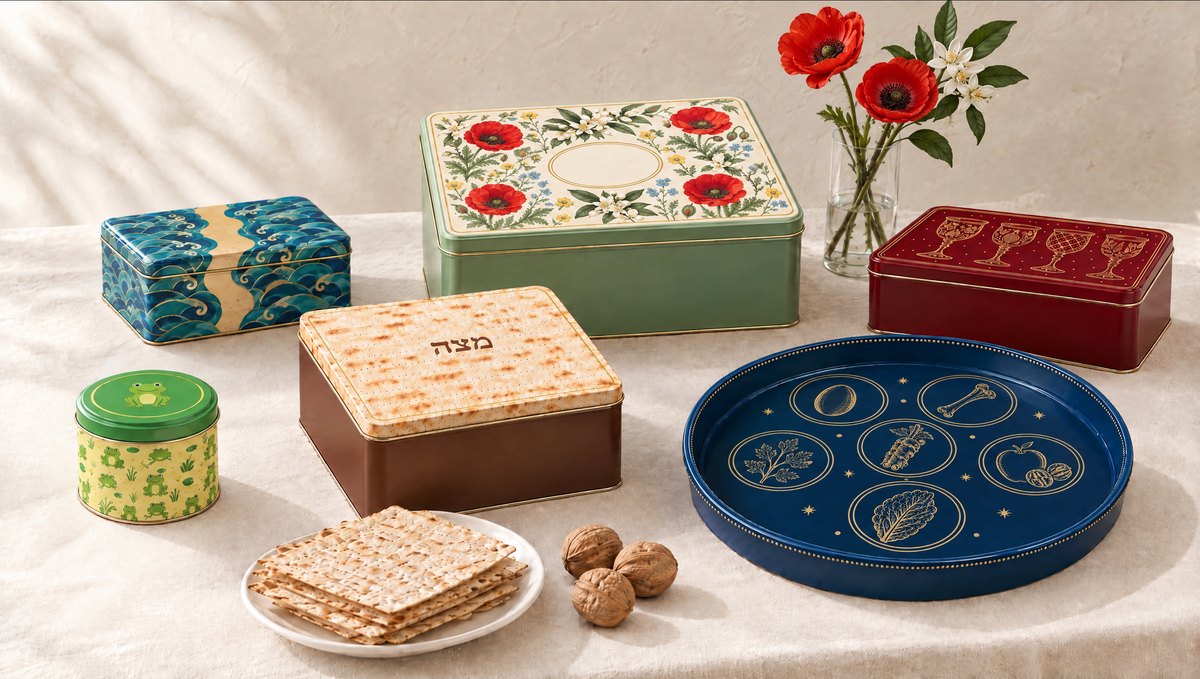
Passover tins for matzah and holiday gifts
For matzah, the Seder table and holiday gifts
Ready-made Passover designs: a matzah tin, a Seder tray and gift tins for holiday sets. Printed on moulds we already own — no tooling cost, no wait.
For the week of Passover leavened food is cleared out of the house and matzah takes its place, and the holiday opens with the Seder, a ritual meal set out in a fixed order around a plate with six places. It is also a season of gifts: guests bring something for the table, and companies send a holiday gift to their staff and customers. All of it needs a container — for the matzah on the table, and for the gift on its way there. These six designs are drawn for that week specifically, on moulds Masaş already owns in Tuzla, İstanbul.
What you are looking at
The designs on this page are ours — drawn in-house and shown here so you can see what the range looks like before committing to anything. Each one is ready to print on moulds we already own, and goes into production once there is an order behind it. That means no tooling cost and no wait for a new shape — only printing and forming.
Tins in this range
Our own designs, printed on our own moulds.
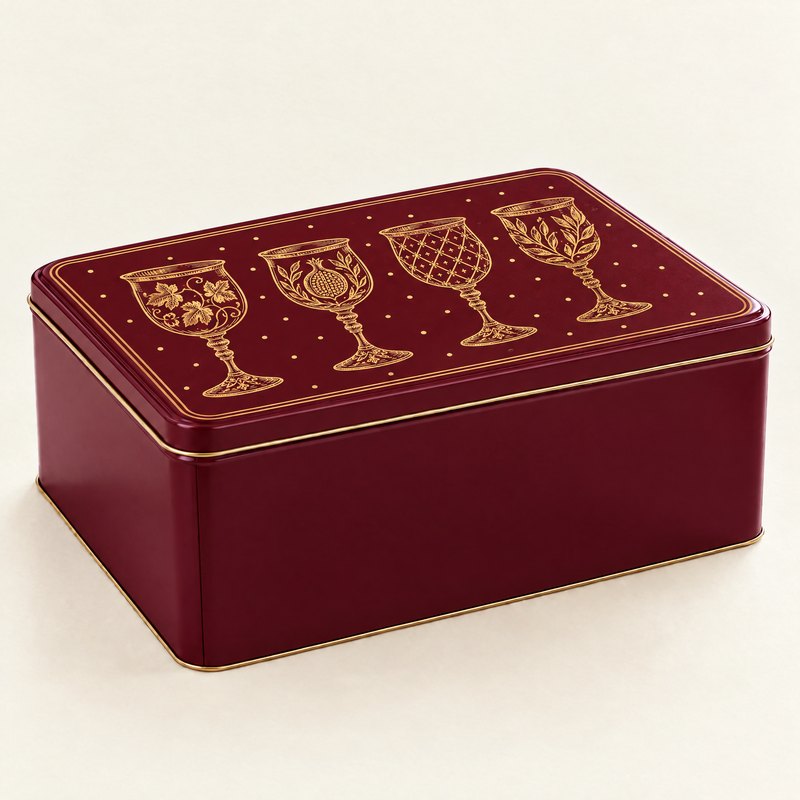
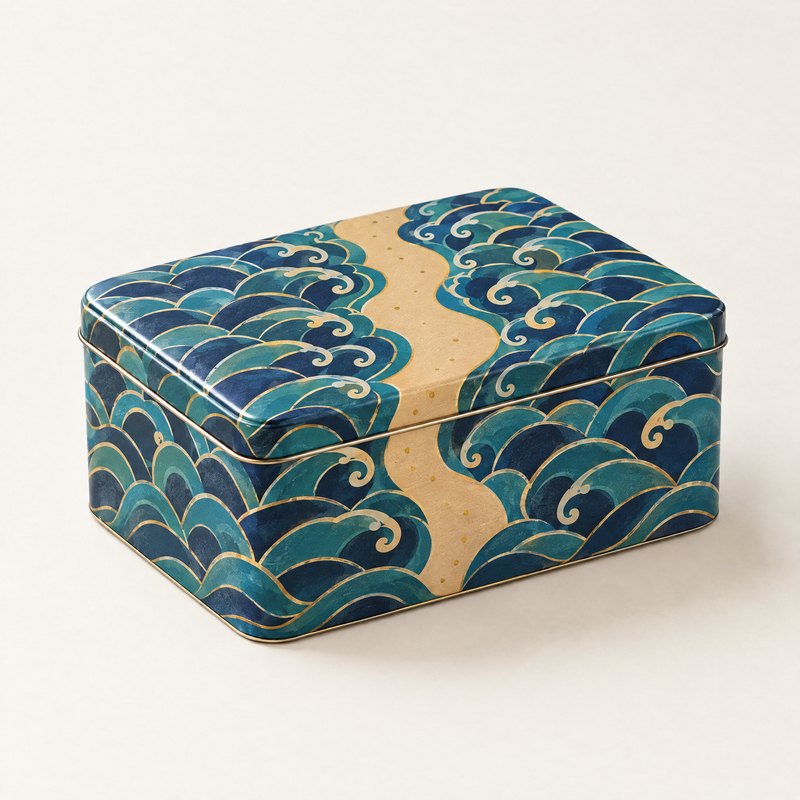
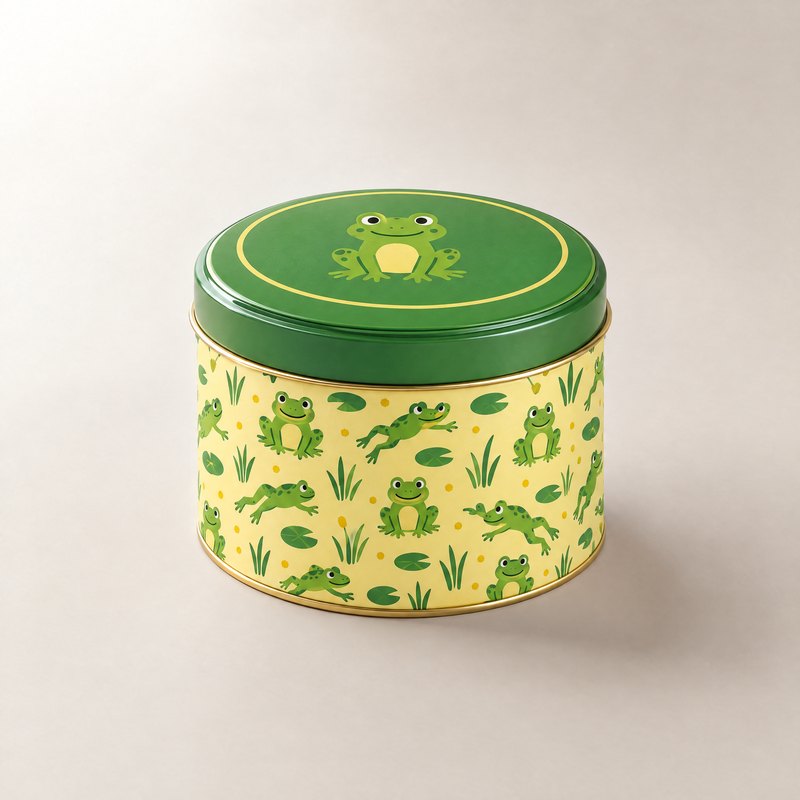
Ordering from this range
- Minimum order
- From 5,000 pieces per design
- Lead time
- 4–6 weeks from artwork approval
- Tooling
- None — these use moulds we already own
Because the mould already exists, a ready-made range skips the eight weeks and the tooling cost a new shape needs. What is left is printing and forming.
Passover gifts in company volumes
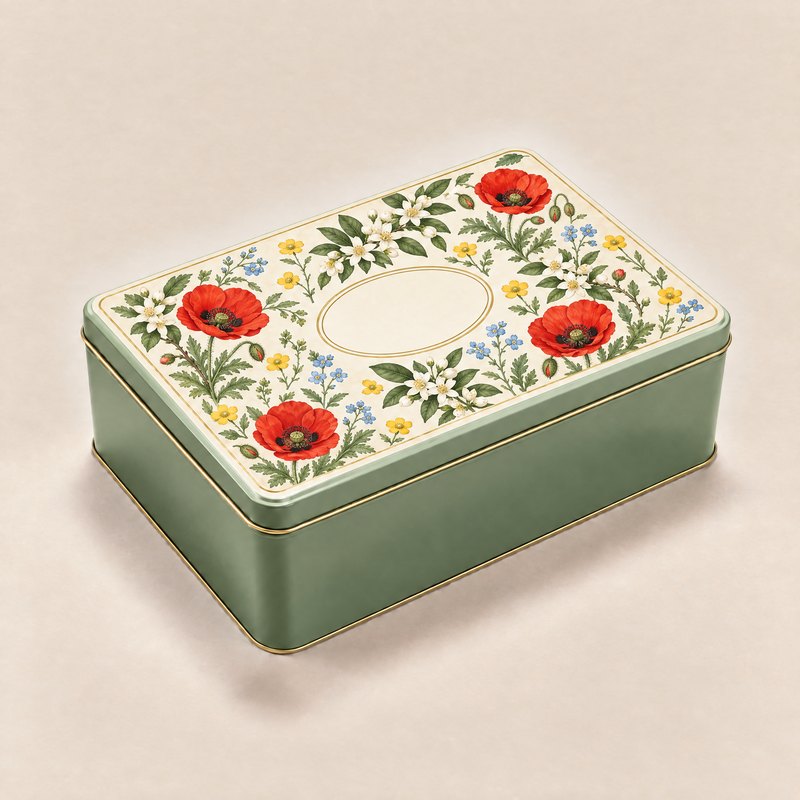
A company that sends a holiday gift to its staff and customers before Passover orders in volumes that change what matters. Not the pattern — the date, and how much the box holds. Three formats in this range are built for a filled gift rather than a single product: the deep hamper, the deep rectangle and the mid-size box. Your name or logo can be printed on the lid alongside the pattern, and one design leaves a blank oval for exactly that. It is the fastest route to a branded holiday gift, because the mould and the artwork both already exist.
The minimum is the same as for any printed design: 5,000 pieces per design. One order can combine several designs and sizes from the range.
Ask about this range →What this range is not
A ready-made design is not exclusive. Anyone can order the same tin, and some of them will be your competitors. If you need artwork nobody else can buy, that is a custom project — same moulds, your own design, and the exclusivity applies to the artwork, not to the shape.
How custom projects work →Frequently asked questions
When do Passover tins have to be ordered?
Passover is fixed in the Hebrew calendar, so its civil date moves: Seder night falls on the evening of 21 April in 2027 and of 10 April in 2028. Count backwards from it — four to six weeks from artwork approval to despatch, then freight, then your own filling — and a company gift is handed out in the weeks before the holiday, not on it. For a company that fills gifts, artwork approved in January is comfortable for a late-April Passover such as 2027; for an early-April one such as 2028, make it December. Artwork approved in March is late in any year. A matzah bakery works to a different clock: baking starts in the autumn, months before the holiday, and the tins have to be in the building first, so that order belongs to the summer before.
Is the packaging kosher for Passover?
Kosher for Passover is certified on the food, by the body that supervises whoever fills the tin, and that certificate belongs to whoever fills the tin. We make the packaging — tinplate with a food-grade lacquer inside, produced under an ISO 22000 food-safety system — and what we issue for it is a food-contact declaration of conformity. Passover supervision is stricter than the rest of the year and may ask about the packaging itself; if yours does, raise it before you order. A supervision mark or the words “kosher for Passover” on the tin are part of your own artwork, like your name: they are yours to supply, as your certifier approves them.
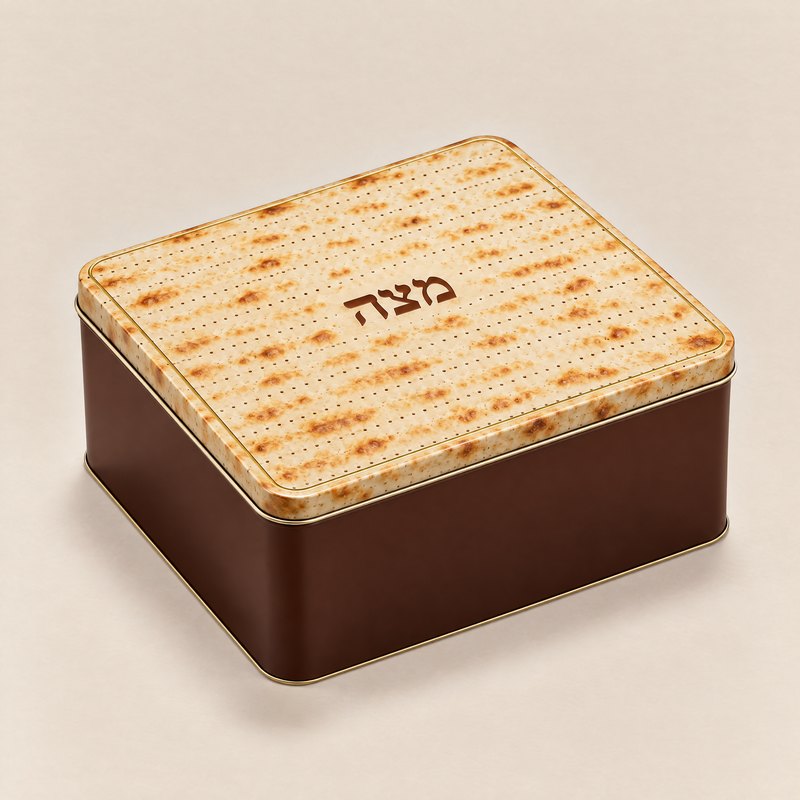
Which matzah fits the matzah tin?
Square machine-made matzah, regular or shmurah. The tin is 215 × 215 mm and is drawn here 110 mm high; the height is set to your pack, and packs differ from bakery to bakery, so send us one before you fix the size, or ask for a sample tin and try it. Round hand-made matzah does not fit: it needs a round tin wider than any we make with a lid — our largest is 265 mm across. We would rather say so here than at the quotation.
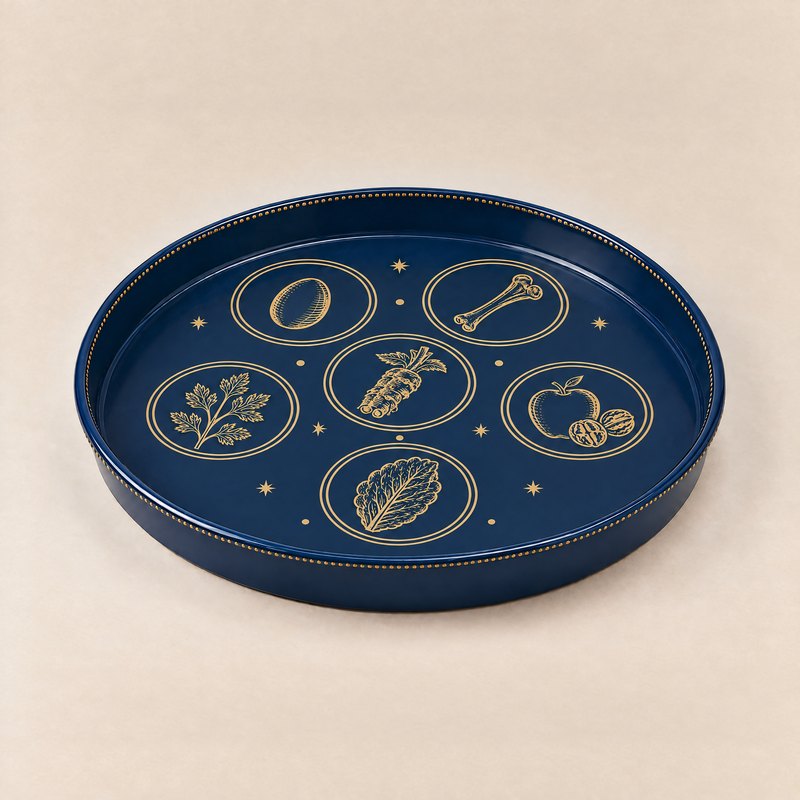
What exactly is the Seder tray?
A printed round tray, 325 mm across, with six medallions — one for each place on the Seder plate — drawn as objects and without lettering, in the arrangement most Seder plates follow. It is a tray, not a dish: the foods sit in small bowls placed on the medallions, which is how many Seder plates are laid in any case. It has no lid, and it is not sold as a food container. The six names, or a different arrangement, are a plate change.
Why does one tin carry a word, and can a company add its own?
The matzah tin carries one word, מצה — matzah in Hebrew — because that is the name of what is inside, not a greeting, and it is the same in every market. The other five designs carry no lettering and no human figures: the greeting belongs to whoever sends the gift, and a figure on a lid is one illustrator’s idea of the Exodus. A company name, a logo or a dedication prints into the blank oval on the 345 × 225 × 130 mm box, and the other designs can take a name alongside the pattern. Adding it is a plate change on the same mould. The designs stay shared: the artwork is ours and anyone can order it; only what you add is yours.
Other ranges
Interested in this range?
Tell us which designs and roughly how many, and we will come back with sizes, prices and a date.
Start the conversation